How to Get HR Buy-In for AI Recruitment Software: A Change-Management Playbook

Summarise This Page with AI



Key Takeaways
- Buy-in for AI recruitment software is earned one stakeholder group at a time, and each group objects for a different reason: recruiters fear replacement, hiring managers fear losing control, HR business partners fear fairness failures, and legal fears liability.
- Decision rights are the trust mechanism. Writing down what the AI decides, what it recommends, and what only a human can approve converts anxiety into a process people can inspect.
- Redesign the recruiter role before rollout, in writing. People accept a tool that changes their job when they can see the job they are moving into.
- Sequence the buy-in: sponsor, then a volunteer pilot team, then hiring managers with evidence, then the wider function. Skipping steps produces workarounds, not adoption.
- Report metrics in the language of each audience. Recruiters care about hours returned and after-hours coverage; finance cares about cost per hire; the CHRO cares about fairness and audit trails.
Why the Best AI Recruitment Rollouts Still Fail
The pattern repeats across talent functions. Leadership approves an AI recruitment software purchase, the vendor delivers a clean implementation, and six months later recruiters are running parallel spreadsheets, hiring managers are asking for "the old process" on their requisitions, and the platform's usage dashboard flatters a rollout nobody trusts.
The technology rarely caused the stall. What caused it was a change that arrived without an argument for each group affected by it, without clarity on who decides what once the AI is in the loop, and without an honest description of how the recruiter's job would change. This playbook covers those three things in order: the objections each stakeholder raises and the answers that hold, the decision-rights design that builds trust, and a buy-in sequence that turns a pilot into a mandate.
Map the Stakeholders and Their Real Objections
Buy-in for AI recruitment software fails when a single message is broadcast to audiences with different fears. Five groups shape the outcome, and each needs its own argument.
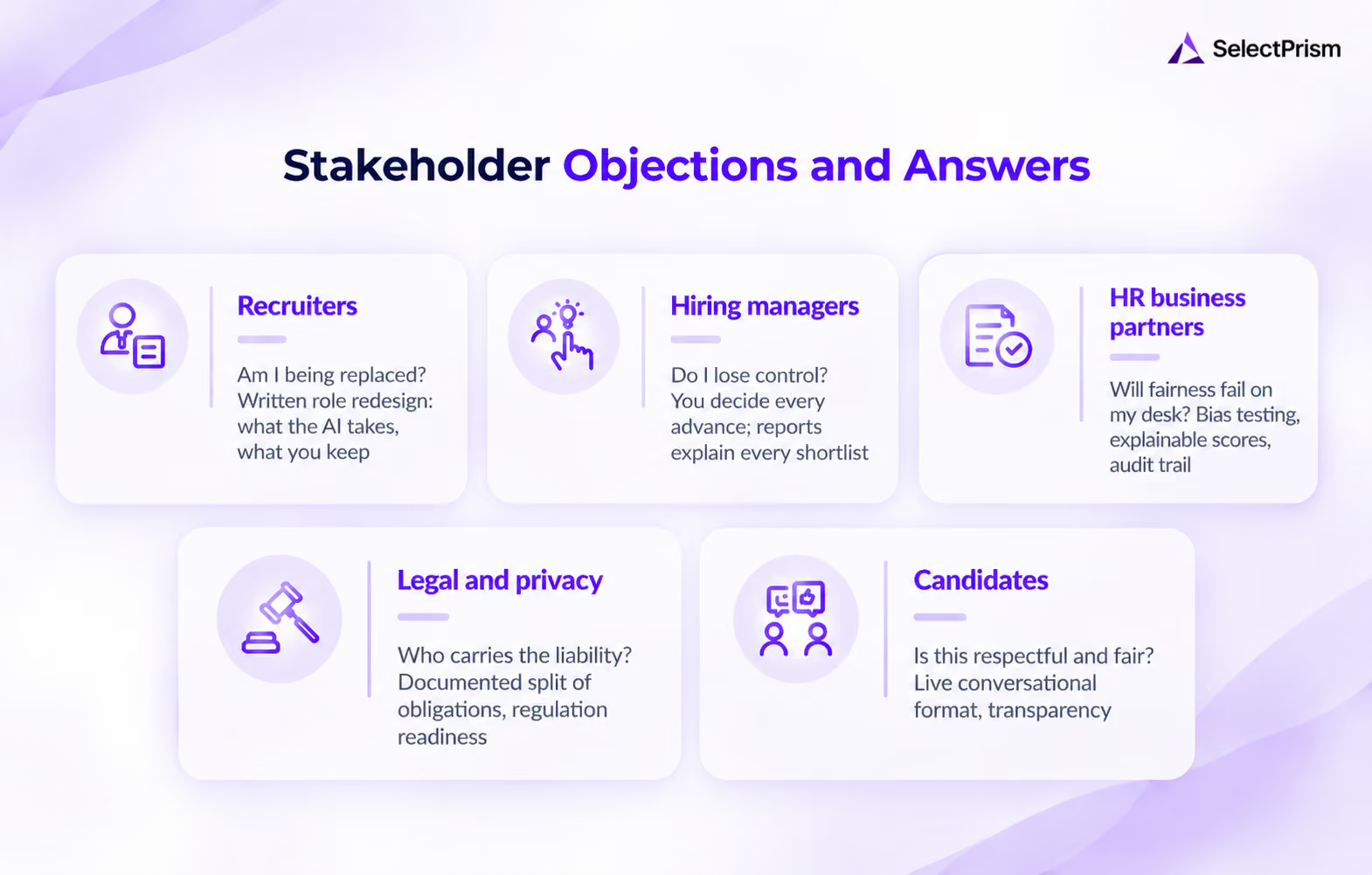
- Recruiters hear "AI" and hear "replacement," and the fear is reasonable when the pitch leads with automation. The answer that holds is specific: which tasks the ai tools for recruitment take over, which the recruiter keeps, and what the recruiter's day looks like afterward. Vague reassurance deepens suspicion.
- Hiring managers fear losing control of who reaches them. The answer is that nothing reaches an offer without their decision, that every candidate the ai hiring software shortlists arrives with a report explaining the recommendation, and that their feedback trains the shortlist.
- HR business partners fear a fairness failure landing on their desk. The answer is evidence from the talent recruitment software itself: outcome testing across groups, explainable scoring, and an audit trail per decision.
- Legal and privacy fear automated-decision liability. The answer is a documented map of which obligations the ai hiring software handles and which remain with the employer, including readiness for rules such as the EU AI Act and New York City's Local Law 144.
- Candidates, though rarely in the room, decide whether the rollout survives contact with the market. The answer is a format that respects their time, live conversational interviews at convenient hours, and transparency about how AI is used.
Design the Decision Rights Before the Demo
Trust in AI comes from knowing exactly where the machine stops. In recruitment, the most effective single artifact is a one-page decision-rights map with three columns: what the AI decides alone (scheduling, reminders, initial matching against a rubric), what the AI recommends for a human to confirm (shortlists, interview scores, integrity flags), and what only a human can approve (rejections, offers, exceptions).
The map changes the conversation from "will the AI replace judgment" to "here is where judgment sits," and it gives every stakeholder something to inspect and amend. Recruiters see they retain the consequential calls. Hiring managers see their sign-off written in. Legal sees the human review that automated-decision rules expect.
Agentic platforms make this concrete: on SelectPrism, Prismforce's agentic AI-based recruitment software, the agent runs matching, screening, and live interviews end to end, then hands recruiters decision-ready reports with scores, strengths, gaps, and integrity status, while advance-or-reject decisions stay with people.
Publish the map before the first demo. People evaluate ai tools for recruitment very differently when they already know the tools cannot reject anyone on their own.
Redesign the Recruiter Role in Writing
The honest message is that the recruiter's job changes, and the persuasive version of that message is a written description of the new job. Under talent recruitment software that runs screening and first-round interviews, coordination work shrinks, and three kinds of work grow: judgment on shortlists and flagged cases, relationship work with candidates and hiring managers, and closing, where the recruiter sells the role to people the process has already qualified.
Two pieces of evidence support the redesign. Research from The Josh Bersin Company, reported by HR Executive, found AI-enabled talent acquisition can cut recruiter application review time by 80 percent and manager and recruiter interview preparation time by 87 percent. And SelectPrism's published figures show 80 minutes saved per candidate at the screening stage. Hours at that scale do not disappear when AI-based recruitment software arrives; they move, and the redesign document says where.
Write the new role as a one-page profile: responsibilities, decisions owned, skills to build, and how performance will be measured. Recruiters who can see the job they are moving into stop defending the job they are leaving.
Sequence the Buy-In
Buy-in is a sequence, and the order is the strategy.
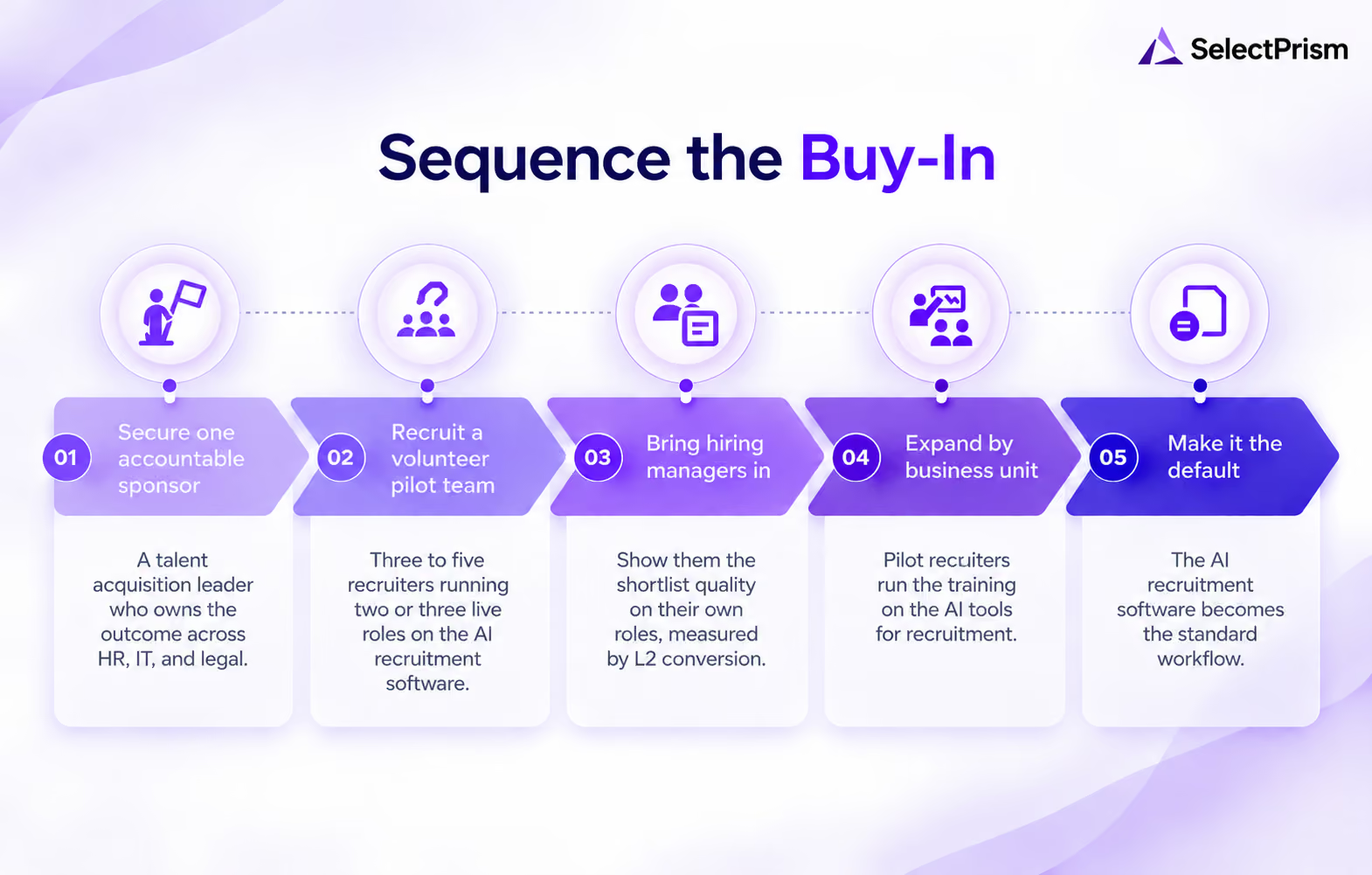
Step 1: Secure one accountable sponsor. A talent acquisition leader who owns the outcome across HR, IT, and legal, and who can say "this is how we hire now" when the pilot proves out.
Step 2: Recruit a volunteer pilot team. Three to five recruiters who opted in, running two or three live roles on the ai recruitment software with metrics baselined before the pilot starts. Volunteers become the credible voices later; conscripts become the resistance.
Step 3: Bring hiring managers in with evidence. Show them the shortlist quality on their own roles, measured by L2 conversion, the share of AI-shortlisted candidates they advance after meeting them. Hiring managers who see a better shortlist stop asking for the old process.
Step 4: Expand by business unit with champions. The pilot recruiters run the training on the ai tools for recruitment. Their credibility, not the vendor's, carries the rollout.
Step 5: Make it the default, not the option. Once evidence exists, the ai recruitment software becomes the standard workflow, with exceptions documented rather than assumed.
The sequence takes longer than a launch email and works far more often. Adoption of AI in hiring is already mainstream, with SHRM Labs putting the share of companies using AI in hiring processes between 35 and 45 percent, which means the question inside most functions is no longer whether but how, and how is a sequencing problem.
Report in Each Audience's Language
The same AI hiring software pilot produces different headlines for different rooms, and the rollout that reports the right number to the right audience keeps its mandate.
Recruiters want to know hours returned per week, how much of the interview load now runs after hours without them, and how many flagged integrity cases they caught rather than missed. Hiring managers want L2 conversion and time from requisition to shortlist.
HR business partners want outcome parity across candidate groups and the count of decisions with an audit trail. Finance wants cost per hire and cost per completed interview. The CHRO wants all of it on one page, plus candidate completion rate, because a process candidates abandon is not a process that scaled.
Reporting this way also answers the objection that surfaces in every talent recruitment software rollout: "the numbers look good for the company, what about for us?" The recruiter dashboard is the answer.
Handle the Three Objections That Survive the Pilot
Even good AI-based recruitment software pilots leave three objections standing, and each has a working answer.
- "The AI missed someone I would have advanced." Treat every such case as a calibration input, not a verdict. Review the transcript and score together, adjust the rubric or threshold where the case justifies it, and log the outcome. A platform whose scores can be traced back to evidence makes this a ten-minute conversation.
- "Candidates will hate it." Measure rather than assume how candidates respond to ai in hr recruitment. Track completion rate and candidate feedback by format, and prefer live, conversational interviews at times candidates choose over one-way recorded formats, which lose qualified people.
- "We are not ready for the compliance exposure." Show the map of obligations, the bias testing evidence, and the audit trail. Readiness is a set of documents, and the documents exist, or they do not.
The Bottom Line
HR buy-in for AI recruitment software is not won with a launch deck. It is won by naming each stakeholder's real objection to AI-based recruitment software and answering it specifically, publishing decision rights so everyone can see where judgment stays, redesigning the recruiter role in writing before anyone is asked to change, sequencing adoption from a sponsor through volunteers to evidence-backed expansion, and reporting results in the language of each audience. Run that way, the rollout stops being something done to the talent function and becomes something the talent function owns.
See how SelectPrism keeps recruiters in control while the agent runs the volume work. Claim 50 Free AI Interviews
Frequently Asked Questions
Answer the replacement fear specifically: publish which tasks the software takes over, which the recruiter keeps, and a written profile of the redesigned role. Then recruit volunteers for the pilot, let them see hours returned on their own requisitions, and make them the champions who train everyone else.
Unaddressed fear across the stakeholders an ai recruitment software rollout touches. Recruiters fear replacement, hiring managers fear losing control, HR partners fear fairness failures, and legal fears liability. A single broadcast message cannot answer all four, so buy-in has to be built group by group with specific evidence.
Write a one-page map with three columns: what the AI decides alone, such as scheduling and initial matching; what it recommends for human confirmation, such as shortlists and scores; and what only a human approves, such as rejections and offers. Publish it before the first demo.
Show them evidence on their own roles rather than a vendor deck. Track L2 conversion, the share of AI-shortlisted candidates they advance after meeting them, and share the decision-ready reports behind each shortlist. Hiring managers who receive a better shortlist stop asking for the old process.
Report by audience: hours returned and after-hours coverage for recruiters, L2 conversion and time to shortlist for hiring managers, outcome parity and audit coverage for HR partners, cost per hire and per interview for finance, and candidate completion rate for the CHRO.
Longer than the implementation of the ai in hr recruitment tools themselves. A sponsor, a volunteer pilot of roughly 30 days with baselined metrics, evidence sharing with hiring managers, and champion-led expansion typically run one to two quarters before the platform becomes the default workflow across the function.
Treat it as calibration rather than failure. Review the transcript and score together, adjust the rubric or threshold where justified, and log the outcome. Platforms with explainable, evidence-linked scoring make this routine, and the pattern of adjustments improves the shortlist over time.