Agentic AI in Recruiting and Hiring: The Future of Talent Acquisition

Summarise This Page with AI



Why Agentic AI Matters in Talent Acquisition
Recruiting delays slow companies down. Top candidates lose patience, morale drops, and vacancies compound in cost.
According to SHRM benchmark data, the cross-industry average time-to-fill sits at roughly 42 to 44 days, with specialized IT and enterprise technical roles stretching even longer.
Furthermore, research from Forrester Research shows that hiring teams conduct significantly more interview rounds per candidate than in previous years, driving up operational overhead and extending time-to-hire by over 20%.
These numbers highlight the real price of delay. Agentic AI matters because it breaks this bottleneck—improving resume match accuracy, ensuring evaluation transparency, delivering a faster candidate experience, and making workforce planning predictable.
From different perspectives:
- CHROs get to see lower hiring costs, better compliance and more predictable pipelines.
- Hiring managers get faster shortlists and less waiting.
- Compliance and legal teams like audit trails and bias control.
- Job candidates get more respectful, transparent and faster experiences.
In this blog, we’ll cover:
- What agentic AI means for recruiting and hiring
- Core capabilities like sourcing, screening, ranking, interviewing, and onboarding
- Real-world use cases across talent acquisition workflows
- Best practices to deploy AI agents responsibly and effectively
- How Prismforce helps CHROs and talent leaders build a scalable, candidate-first hiring process
- FAQs around the benefits of agentic AI for talent acquisition, risks, and differences from generative AI
What Is Agentic AI for Recruiting and Hiring?
Agentic AI in hiring is a new kind of AI. It does more than follow instructions. It works toward goals, senses context and acts without being asked every time.
In recruiting, that means many things. It means the system can source and perform AI candidate screening by itself. It can screen resumes using algorithms. It can suggest which candidates to interview. It can even generate the offer letter or automate onboarding tasks. All with minimal human prompting, though with oversight to keep things fair.
Here are some features people get excited about:
- It begins tasks by itself, such as scheduling interviews or sending reminders.
- It matches resumes with job descriptions, finding best fits without manual filtering.
- It uses bias-aware methods so the decisions are fair and auditable.
- It integrates with existing tools like ATS, CRM and HRIS so you do not have to rebuild everything.
- It gives explanations for its decisions so hiring managers can see why certain candidates are shortlisted or ranked.
Agentic AI versus Traditional Recruitment Automation
Traditional automation tools help with parts of the hiring process. They may parse resumes, send auto-emails or help with scheduling. But they are mostly reactive. They wait for humans to trigger them.
AI recruiting automation is different. It takes initiative. It adapts. It works through the whole process.
Here is a comparison:
Agentic AI is not going to eliminate human work. It augments it. The human touch is still needed in setting goals, reviewing critical decisions, and maintaining trust. But what agentic AI brings is scale, intelligence and speed.
Core Capabilities of Agentic AI in Recruiting and Hiring
Let’s talk about what agentic AI in recruiting can actually do in practical recruiting.
- Sourcing and screening
The AI can source candidates from job boards, social networks, and internal databases. Then it can screen resumes using algorithms that match experience, skills and job description. This means fewer hours spent scanning irrelevant resumes. - Ranking and recommendation
The system can assign a score to each candidate. It can recommend which ones are top fits. Hiring managers can see shortlists generated by AI, and see why those were chosen. - Interview scheduling and assessment
The AI schedules assessments or interviews without needing every manual step. It can send reminders. It can collect structured feedback. It can help coordinate availability. - Candidate evaluation with prediction
Using predictive models it can assess likely job performance, fit with the team culture, or future success. That helps reduce poor hires. - Offer letter creation and final decision
Once a candidate is selected the AI can generate the offer letter, possibly personalized. It can also help predict how likely the candidate is to accept. That gives you a chance to adjust if needed. - Onboarding workflow automation
After a candidate accepts the offer the system can automate paperwork, compliance checks, orientation scheduling and initial training setup. That improves experience for the new hire and reduces administrative load.
All of this together makes recruiting faster, more accurate, more scalable and more transparent.
Use Cases in Talent Acquisition
Agentic AI for talent acquisition is not a one-size-fits-all solution. Different organizations benefit in different ways depending on their size, sector and recruiting challenges.
- In technology or IT services firms with many open roles often the pipelines are huge. Agentic AI helps them screen high volumes, rank quicker, respond faster.
- In finance or banking where compliance, regulation and fairness matter, the transparency and audit trails are major benefits.
- In retail and seasonal industries where hiring volume can spike, automating onboarding and screening reduces overhead.
- In campus recruiting where many candidates are early-career, predictive assessments and fair ranking help find potential, not just polish.
- For companies trying to improve diversity, agentic AI helps when it is built with bias control, transparency and equitable evaluation.
Candidates also benefit. They don’t wait weeks without communication. They know where they are in the process. They have fair assessments. They get more personalized feedback. That builds trust and employer brand.
Best Practices to Deploy Agentic AI for Recruitment and Hiring
Using autonomous AI recruiting well is more than buying a tool. It is about process, responsibility and alignment with AI hiring best practices.
- Define your goals clearly
Decide what metrics matter most. Time to hire, candidate engagement, resume match accuracy, offer acceptance, etc. Know what outcomes you want. - Build strong governance and ethical guardrails
Make sure there are ways to check for bias. Ensure decisions are explainable. Keep audit trails. Respect the privacy of candidate data. - Keep the candidate’s experience central
Communication should be timely, clear and personalized. Avoid silence or generic messages. Make sure candidates feel respected. - Integrate well with your existing tools
Agentic AI should work alongside ATS, HRIS, CRM systems. That prevents duplication of work and helps data flow cleanly. - Pilot first, measure and iterate
Try agentic AI in one stream or department first. Measure what works, where bottlenecks appear. Adjust. Expand. - Train your team
Having AI is not enough. Hiring managers, recruiters, product owners need to understand how the AI makes recommendations, what constraints exist, how to override or adjust decisions when necessary.
Build the Best Talent Acquisition Process with Prismforce
At Prismforce we believe hiring should be smart, fair and fast. Our product suite lets organizations harness agentic AI across the recruiting-to-hiring workflow.
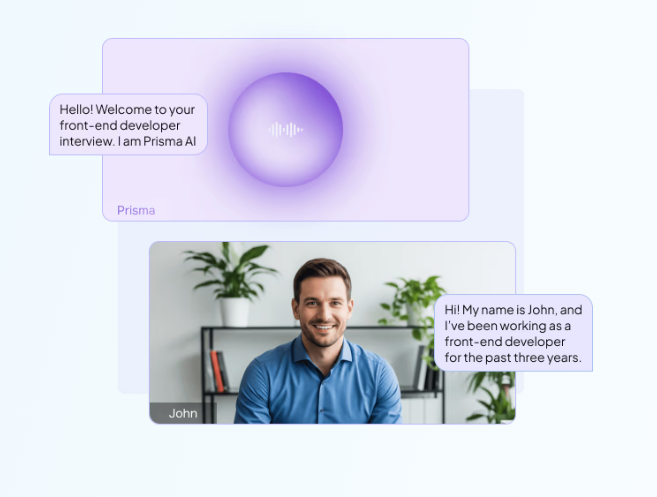
With our tools you can:
- Automate sourcing, screening and candidate ranking
- Get AI-driven recommendations with transparent decision logic
- Generate offer letters and automate onboarding tasks
- Track metrics like candidate score, time to hire, engagement rate and compliance adherence
All this while you keep control of what matters — fairness, culture fit and human judgment.
Visit the SelectPrism page to learn more.
Frequently Asked Questions
You get faster candidate shortlists, better resume-job matching, less manual work for your team. It helps reduce bias and gives hiring managers confident recommendations.
Generative AI helps create content like job descriptions or email templates. Agentic AI does more. It acts. It can initiate tasks, rank candidates, schedule interviews, generate recommendations and automate workflows.
They can handle a lot of sourcing, screening, AI interview scheduling, and generating offer letters. But in best practices, humans still review decisions. For example, you want human review for final hiring, for fairness, and for unexpected situations.
Good agentic AI platforms use strong encryption, ensure compliance with regional privacy laws, maintain audit logs, and follow transparent decision making so data is handled responsibly.
Some risks are data bias, lack of transparency, over-dependence on algorithms, poorly defined job descriptions that mislead, or situations where AI cannot capture human nuance.
Final Thoughts
Agentic AI is not just another upgrade in recruiting. It means doing recruiting differently. It means faster, fairer, more intelligent processes that respect both candidates and organizations. If used well, it becomes a multiplier of value — freeing human recruiters to focus on what only people can do: connecting, empathizing, building culture, making judgment calls.
With tools like Prismforce you can build a recruiting practice that works intelligently, respects fairness, and moves at the speed the modern world demands.